Few skin concerns carry the emotional weight that acne does. Even after you’ve endured the hit to self-confidence that comes with active breakouts, you may have to deal with acne scars that carry over to adulthood. Thankfully, no matter where you are in this storyline, you now have more power than ever to do something about acne and acne scars.

At The Gillian Institute in Indianapolis, Dr. Kimberly Short and her team offer a full range of clinical treatments that address both active acne and the scars that breakouts often leave behind. Our approaches are tailored to your skin type, your type of scarring and your personal goals.
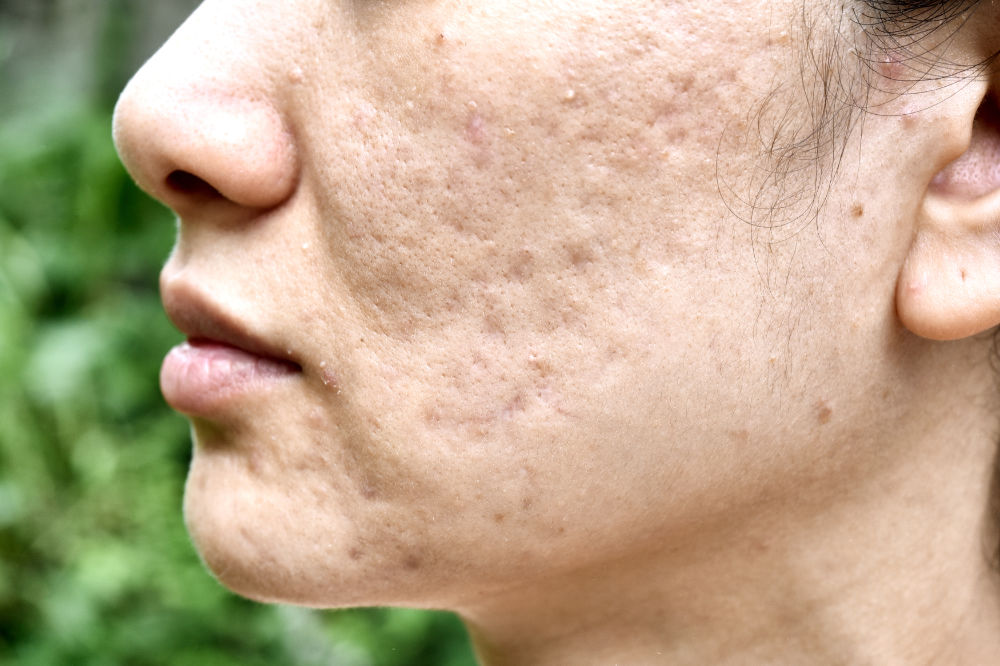
What Causes Acne and Acne Scars?

Acne develops when hair follicles become clogged with oil (sebum) and dead skin cells, creating an environment where bacteria can multiply and trigger inflammation. The result ranges from minor blackheads and whiteheads to deep, painful cysts that damage the surrounding skin tissue.
The following factors can increase your risk of experiencing acne and its aftermath:

  • Hormonal fluctuations
  • Genetics
  • Some medications and supplements
  • High-glycemic foods
  • Skin barrier problems (harsh products, over-cleansing, etc.).

Acne scars are a result of the skin’s response to acne-related inflammation. The body produces collagen to repair the skin, but too much or too little collagen can cause depressed or raised scars, respectively.

Atrophic scars (the depressed type) account for the vast majority of acne scarring and come in three subtypes: icepick scars (deep, narrow channels), boxcar scars (wider depressions with defined edges) and rolling scars (broad, wave-like disruptions in the skin’s surface). Each subtype responds differently to treatment, which is one reason why a personalized evaluation matters more than a one-size-fits-all approach.

How Are Acne and Acne Scars Treated at The Gillian Institute?

Effectively treating acne and scars requires a strategy that takes into account your skin type, the severity of your scarring, your history with breakouts and your lifestyle. Dr. Short and her team draw on a range of well-evidenced treatments to deliver results that best suit your situation.

Laser Skin Resurfacing

Laser skin resurfacing is one of the most effective treatments available for atrophic acne scars. The Gillian Institute uses the Rohrer Phoenix CO2 laser, a fractional ablative system that removes microscopic columns of damaged skin tissue while leaving surrounding tissue intact. This triggers a controlled wound-healing response, stimulating the production of new collagen and elastin and progressively smoothing the texture of scarred skin.

PRP (Platelet-Rich Plasma) Treatments

Platelet-rich plasma therapy leverages your body’s own healing mechanisms to repair scarred tissue. A small sample of your blood is drawn, processed to concentrate the growth-factor-rich platelets, and then applied to the treatment area. PRP is often applied topically after microneedling or via direct injection into specific scar depressions.

Medical-Grade Skincare

For many patients, professional skincare products prescribed or recommended by The Gillian Institute’s team are a crucial component of successful long-term scar improvement.
Retinoids are still widely considered the gold standard for topical acne therapy. They normalize cell turnover, prevent follicle clogging and stimulate collagen production in post-acne skin. Medical-grade vitamin C serums address post-inflammatory hyperpigmentation by preventing melanin production. Niacinamide reduces sebum production and calms inflammation, making it a strong option for both active acne and the residual redness that lingers after breakouts heal.

Chemical Peels

Chemical peels use carefully selected acids, such as glycolic, salicylic, trichloroacetic (TCA) and others, to remove the outermost layers of skin and encourage cellular turnover. For active acne, salicylic acid peels are particularly effective because salicylic acid is oil-soluble and can penetrate the follicle to clear out sebum and debris. For post-acne pigmentation and mild surface scarring, glycolic and TCA peels encourage new cell growth and even out skin tone.

Why Choose The Gillian Institute for Acne and Acne Scar Treatment?

At The Gillian Institute, your experience is personalized from the first point of contact to well after your treatment. It starts with a thorough evaluation from a board-certified plastic surgeon whose training includes advanced laser techniques and facial skin care developed across fellowships in the U.S. and abroad. Dr. Short trained with nationally recognized laser specialists while completing her post-graduate fellowships and has built a practice that integrates surgical expertise with non-surgical skin care at the highest level.

Her team of licensed aestheticians adds another layer of clinical expertise and experience in medical-grade skincare protocols, chemical peels and combination approaches designed for better, more sustainable results.

Schedule your virtual consultation or in-person visit at our Indianapolis office today by calling (317) 913-3260. The Gillian Institute proudly serves the areas of Carmel, Fishers and Indianapolis.

FAQs

Do acne scars go away on their own?

Milder instances of post-inflammatory redness and hyperpigmentation can fade over time, especially with sun protection and a consistent skincare routine. However, the depressed, pitted or raised changes in the skin’s structure rarely resolve significantly on their own.

How many laser treatments will I need for acne scars?

The answer depends on the depth and type of your scarring, your skin tone and the laser settings used. Many patients with moderate scarring see meaningful improvement after one to three CO2 laser sessions, spaced several months apart to allow for full healing between treatments.

Is laser resurfacing safe for darker skin tones?

Fractional CO2 laser can be used safely on a range of skin tones, but settings need to be carefully calibrated for patients with darker skin tones to minimize the risk of post-inflammatory hyperpigmentation.

What's the recovery like after CO2 laser resurfacing for acne scars?

Expect four to seven days of redness, swelling and skin shedding after a fractional CO2 treatment. The skin will feel sensitive and look raw during this period, followed by pinkness that typically fades over the following two to four weeks. Full results continue developing for three to six months as collagen remodeling progresses.